Showing posts with label Madagascar. Show all posts

Monday, January 6, 2014

Searching for Superorganisms: An Urban Expedition in Madagascar

Every year, tens of thousands of international tourists and researchers descend into the wilds of Madagascar in search of the rarest of the rare organisms on earth. Lemurs, lizards, and even lacewings are just some of the hundreds of endemic species making the island a critical global biodiversity hot spot. While I love spending time in the natural lands of the countryside, these are not the important organisms that I am seeking. I am searching for superorganisms.

A superorganism is, simply, a larger organism - itself made of smaller organisms working towards a common good. Bees in a bee hive are a classic example of such phenomena. When groups become so well coordinated and integrated so as to function as a singular unit, so the metaphor goes - they become a superorganism. Alas - I am not looking for bees either... the endemic species of superorganism I am searching for is located only in very specific environments: the University Cities of Madagascar!

My lab at the University of Toliara has completed it's first year of experimental programming, and we now prepare for 2014 and beyond, focusing on our primary objective: the mapping and cultivating of the University-Assisted Community School (UACS) model in each of the six Malagasy cities housing one of the National University System campuses.

The UACS model, developed extensively by the Netter Center at University of Pennsylvania, supports strong partnerships between university students and regional schools. What's more, such partnerships work towards the aims of highly effective Community School models (in which schools and communities work collaboratively towards widespread benefit).

Now, if my international team of undergrads through PhD candidates is able to both find and cultivate strong partnerships between Malagasy universities, regional school systems, and local communities; how will we know if we are looking at a real superorganism?

Is a UACS model iteself a superorganism, or is it an ecosystem of superorganisms?
OR - is it just an ecosystem of human organisms??

I earlier described superorganisms as both a metaphor and a reality - and that is the exact point of exploration for the programming that lies ahead.

As our lab works toward the critical aim of cultivating UACS models in Madagascar, we will be guided by a top pick of global curriculum to aid us in developing scientific perspectives on the nature and narrative of the school as superorganism.

Pictured above is our (very fledgling) collection of resources. A sort of UACS incubator in a suitcase if you will. Through generous private donations, this year I bring a panoply of resources ranging from Tablets (3) and a Laptop (1), to a portable EEG headset* (1), and most critically - the absolute best in both science and civics curriculum from around the world!

Our three specific curriculum resources:
  • The Big History Project
    • 13.7 billion years of history and more  - on one little DVD-ROM! 
    • This incredible resource brings an internationally benchmarked curricular foundation to Malagasy schools, and one that integrates the physical, biological, and social sciences in a comprehensible and awe-inspiring way! 
    • It is within this context of Big History that students are given lenses through which to view their community as a nested complex of organs, organisms, and super-organisms in both metaphoric and scientific terms. 
  • Project Citizen (Malagasy Edition)
    • A service-learning project in which university students work with high school students to analyze public policy and advocate for positive community development.
    • This is the work-horse of our applied learning opportunities and provides tangible benefits for students, schools, and the broader community!
    • As students begin to search their own community for signs of the UACS superorganism, we will use the lauded Project Citizen framework to examine potential policy development opportunities. 
  • TED-ED
    • DVD's loaded with topical TED Talks on issues of Education, Community Development, Urban Studies, Digital Democracy, and much, much more!
    • All videos are offered with both french and english sub-titles. This promises to transform our previously struggling English Language Learning Center!
Our information technology resources are slim to say the least - the only way to proceed in such a harsh environment is to capitalize on social capital - bonding and bridging our way to a system of superorganismic significance. That is to say.... using the UACS model, we can now deploy our more than capable University of Toliara Teachers-in-Training into our regional K-12 school partners with the absolute leading-edge of curriculum in hand and mind. 

As the high school and university students of Toliara work together to map and cultivate a healthy UACS superorganism locally, they are really cultivating a healthy future for their city and university cities, globally. There is something about studying the big history of brains, schools, and society all together and all at once - which catalyzes the growth of this exciting prospect. I hope you'll join us over the year on our expedition in search of the superorganisms of urban Madagascar!

*For those wondering how we can use an EEG headset (a measurement tool for brainwaves), our educational psychology students have a special interest in neuropsychology, and this entry level tool, combined with our curricular resources will give them access to new horizons of understanding the effects of, for example, fear, stress and play in student learning and life success. 

Tuesday, August 20, 2013

Evolving Democracy and STEAMing BIG History

"That's the problem with the Malagasy people" my biology student, Etienne, explained to me in response to hearing about the recent theft of seven new computers in our neighboring psychology department. Etienne isn't in any of my classes, but many students across our small institution are terribly upset by the loss of this scarce resource. These seven computers were to be shared by over 75 students, and now there are none.

What are the students to do? 

Our young scholars at the University of Toliara have had to deal with political turmoil in the past, yet too often their solutions have actually boomeranged and come back to negatively impact their own education. A simple example occurred about a year ago when angry students cut the new internet cable to their rural campus in protest of a variety of economic and political challenges. Clearly - we have a community need to explore the role of democracy in our educational system here.

Evolving Democracy
Our Positive Education Action-Research (PEAR) Laboratory is now facilitating a series of cross-disciplinary student leadership training sessions to develop a Student Technology Leadership Committee, the Universities first explicitly democratic student-run committee, and interestingly, a committee founded on evolutionary principles.

Our unique educational model of BIG Content + Applied Context provides a simple formula for richly integrating evolutionary sciences within the fabric of our learning environments. Let me spare you the theory, and just cut to what we are actually do on the ground.

A BIG History of the Democratic Brain
We have identified a clear problem in our educational community, the theft our common-pool computer resources. So - as scientists of the human condition, how should our students understand the context to such a problem? Is it, as my biology student suggested, "the problem of the Malagasy people"? That is - is there some essential difference between the Malagasy people and people from Universities where computers don't get stolen? That's one hypothesis that appears popular among my students, but I offer a different theory. I suggest to my students that perhaps the causal explanation for the thefts lie not in differences among people, but in differences among the organization of groups of individuals. How can we test these competing hypotheses?

Well, as scientists we always start with a literature review. Here at the PEAR Lab this means exploring a structured framework based on the Thresholds of Big History utilized in the Bill Gates sponsored Big History Project.

Students explore a BIG History of the Democratic Brain, by reviewing selected chapters of history from a Unified Human Sciences perspective. Criss-crossing among disciplines and scales of time and space, a coherent narrative begins to form around group dynamics, human decision making, and the functions and scales of democracy.

Part of this BIG History also includes the many Little Histories of the science of the BrainMind and Human Culture itself.

It is here that we drill deeper into the functioning of groups, and it is here where we start to do something I call STEAMing a BIG History. In the education world, there is a growing movement to integrate Science, Technology, Engineering, Arts, and Mathematics (STEAM) into a cohesive integrated approach (Yakman 2008, 2010). We are connecting this with the innovations of BIG History and channeling both into applied service-learning projects. Let me explain.

A Recipe for STEAMed BIG History


I met with Etienne and his student colleagues to "train-the-trainer" - in a variety of technology development areas. For these students, using computers is a whole new world, we start with the very basics of Gmail and internet searches. Yet, within about three hours he has started to develop his Biology Departments struggling website, and - we were able to examine our hypotheses about the stolen computers through experimental modeling. 

Using the actor-based modeling software, Net Logo (Wilensky 1999), we explored a social-dynamics model called "Prisoner's Dilemma N-Person Iterated model" (Wilensky 2002) . Here, the "actors" in the model walk around randomly, and when two actors meet, they play a simple game. Each actor can either "cooperate" or "defect". If both players cooperate, both will get 3 points. If one cooperates and one defects; the cooperator gets nothing and the defector gets 5 points. If both players defect, both get 1 point. Very simple rules, yet as we saw - some very complex dynamics emerge. 

By altering the behavioral strategies of the actors in our little world - Etienne and friends get to literally play with a multitude of societal scenarios:
  • What if we live in a world where half the people always cooperate and half always defect? 
  • What if we live in a world where reputation matters and there is monitoring and enforcement of cooperation? 
Through experimentation and discussion, we found there may exist critical thresholds of social organization within which free-riding on the group becomes the less attractive option, social environments where cooperation is king! When we overlay this with the history of Elinor Ostrom's generalized principles for group-level functioning (Wilson, Ostrom, and Cox 2013), and discuss connections to our BIG History perspective - the development of our democratic technology committee is increasingly imbued with a rich new context of community change. 

In the past, Etienne and his friends would have kept on believing that this computer theft was simply "the problem of the Malagasy people". Today, they have been given the tools to create group-level changes to prove that in fact, the Malagasy people are every bit as good as the rest of the world - we just all need environments that allow the better angels of our nature to emerge and flourish!


References

Wilensky, U. (1999). NetLogo. Evanston, IL: Center for Connected Learning and Computer-Based Modeling, Northwestern Institute on Complex Systems, Northwestern University. Retrieved from http://ccl.northwestern.edu/netlogo/

Wilensky, U. (2002). NetLogo PD N-Person Iterated model. Evanston, IL: Center for Connected Learning and Computer-Based Modeling, Northwestern Institute on Complex Systems, Northwestern University. Retrieved from http://ccl.northwestern.edu/netlogo/models/PDN-PersonIterated

Wilson, D. S., Ostrom, E., & Cox, M. E. (2013). Generalizing the core design principles for the efficacy of groups. Journal of Economic Behavior & Organization, 90, S21–S32. doi:10.1016/j.jebo.2012.12.010

Yakman, G. (2008). STEAM education: an overview of creating a model of integrative education. Proceeding of PATT on 19th ITEEA conference. 

Yakman, G. (2010). STE@M: An Overview of an Educational Model, (June). Retrieved from http://www.steamedu.com/WhatisSTEAM.Aggie.pdf

Saturday, July 6, 2013

Zen and the art of GMO Policy Making


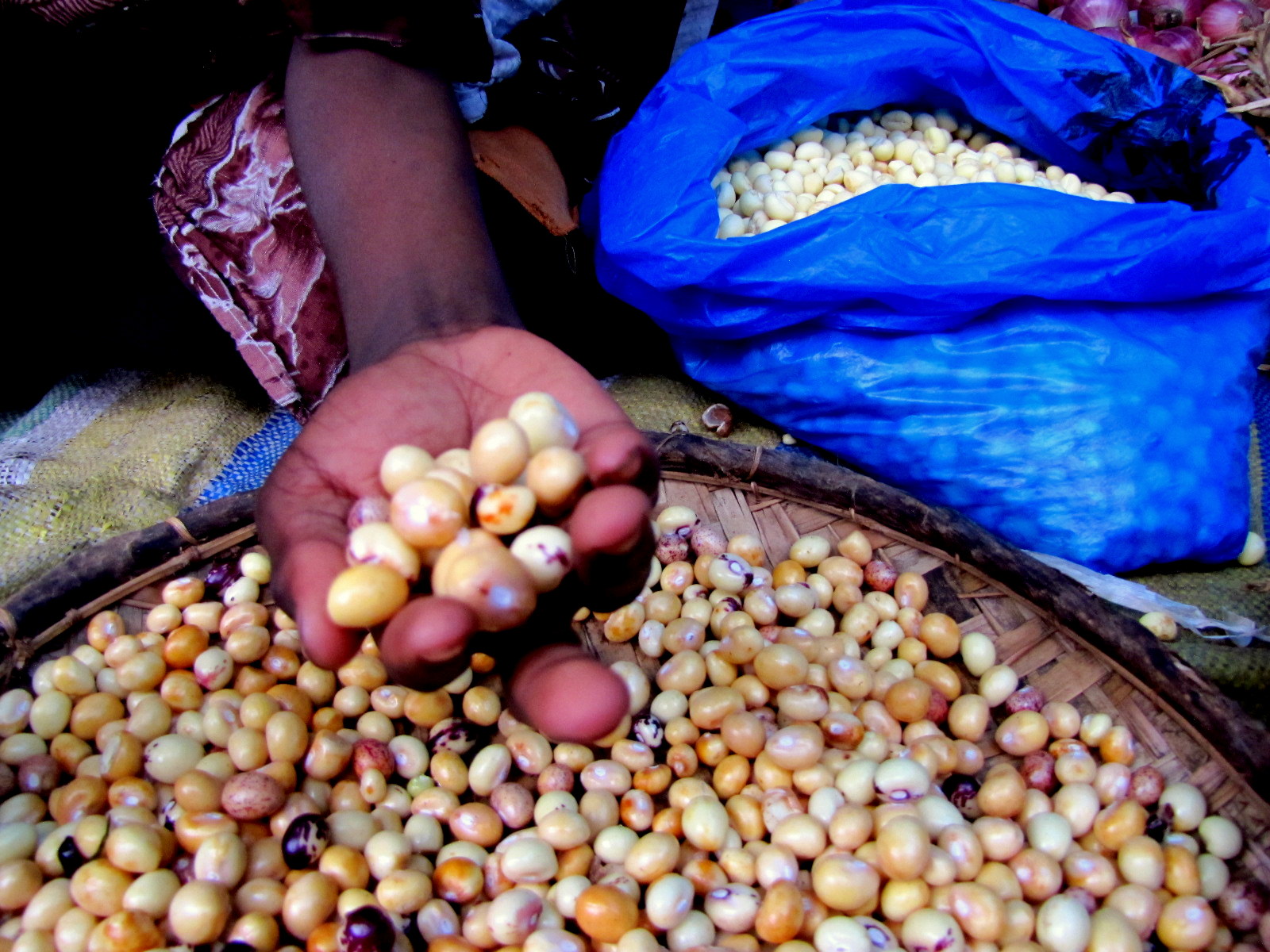
Madagascar is an island known the world over for it's unique evolutionary pathway. A pathway fated early on from it's isolated location in the Indian ocean conspiring with it's natural geological diversity to yield an unimaginably endemic radiation of plant and animalian diversity. Yet this diversity was 'fated', as it were, by situational happenstance - not conscious intent. Then, some two-thousand years ago - waves of a species with a most curious cranium began to land on these bleeding red shores. Humanity has left it's mark on Madagascar is fascinating ways; some intentional, perhaps, some unintentional. The on-going march of domestication of plants and animals in Malagasy agricultural systems is perhaps the most beautiful and complex blending of such intentional and unintentional change. For example, the voanjobory bean is a unique culinary treasure. Selected each season by skilled Malagasy farmers; this richly nutty legume offers a world of flavor beyond the bean isle of any western supermarket. The voanjobory is just one crop of many selected in this manner by taste and performance each growing season. An intentional selection process, the rise of which has cultivated human civilization for over 10,000 years! But the world is changing quickly; the variety of crops today's farmer may select from is expanding. From farm to region, nation to the world; globalizing forces, for better or worse, have expanded the choices each farmer must select from for any given field. In addition to global trade in agricultural seeds; a faster rate of flow is occurring in the symbolic domain of information. Basic Internet infrastructure combined with robust international scientific (and media) networking, now serve as strong environmental forces of selection for the thoughts and feelings a given farmer, student, researcher, or public policy maker experiences. Genetically Modified Organisms (GMOs) are the new kids on the block in the agri-seed ecosystem; and their arrival on the world stage has been met with exactly the kind of tribalistic brow-beating one would predict from the science of our moralistic brains

When it comes to GMOs in Africa; Madagascar is an exquisite case study. While details on current public policy are still vague (our students are hard at work separating fact from fiction!); we do know that Madagascar has among the most strict prohibitions on this facet of biotechnology across the continent of Africa. There are currently neither production nor experimental field trials of GMOs on the island.

So what...

Is Madagascar a forward thinking paradise for organic and "sustainable" agriculture, keeping the health of it's citizens and environment on the forefront of agricultural policy? 
OR
Has Madagascar taken a knee-jerk anti-science policy position; a form a neo-colonialism brought on by anti-GMO activists from the western world (sensu Paarlberg 2009)?

Now - I could go on to offer you (and my students at the University of Toliara) an "evidence-based" review of the literature; and in doing so I could compose a (seemingly) coherent argument strongly supporting either of these conflicting positions. Indeed; from my experiences in higher education - the rule rather than the exception is for students to be educated in one tradition or the other; both under an explicit guise of "critical thinking". Obviously a "fair and balanced" approach where all perspectives are considered is the seemingly more 'honest' approach to teaching this complex content - yet it remains to be seen that a science-based pedagogy exists that can really engage students in such critical thinking.

The Agricultural IST Students at University of Toliara
The first organized University-level program to engage
the question of GMOs in Malagasy Agriculture!
One common solution is to force students into a "debate" on the issues; we tell them to use their reasoning skills to formulate a moral stance based on evidence. We then reward them for parroting the talking points of a given tribal position. This approach would be fine if  "GMOs in Madagascar" really were a black-and-white, yes-or-no question; instead this issue represents a world of gray, a world begging for nuanced civility in the discourse (Paarlberg 2009). As University of Minnesota Professor, Jonathan Foley says "We have to get it right on our first (and only) try".

What if we change the questions we are asking? What if instead of telling students to use their reasoning skills to join one tribe or another; we tell them a new story about the functioning of our moral brains, and we give them a new vantage point from which to explore the science. This is exactly the experiment we launched last month at the agricultural Institut Superior Technologique (IST) at the University of Toliara here in SW Madagascar.

If want to see a reasoned, rational debate on GMOs in Madagascar; the first place to start is with human irrationality! When the competing tribes of science evoke the rational "evidence-based" approach of their own side; they are demonstrating a profound anti-science stance regarding the human condition. Advances in evolutionary science and moral psychology over and over again tell us a different story of our moral and moralistic brains.

We are tribalistic intuitionists; most ALL of us. We believe first and reason second. Our brains are naturally social and emotional - not scientific. "Well of course most people are like that, but not me and not my friends; We use reason and critical thinking!" - you are saying to yourself. Well - with all due respect, this is improbable at best (Haidt 2012, Kurzban 2012)

So what is to be done in the classroom? Well; a new science of intentional change is emerging that opens a mountainous set of tools for the curious educator to explore. In short; if we view the full range of diversity in opinion (on say, GMOs in Madagascar) as the end result (phenotype) of proximate evolutionary processes governing behavior, emotion, and cognition - we can begin to formulate environmental changes to the classroom that select for our most core values, rather than the knee-jerk (unIntentional - with a capital I) intuitional responses that our brains are so so good at 'naturally selecting' for (Wilson 2011, Wilson et.al in press). HUH? WHA?

In simpler terms.... rather than telling students to try to pick a side; we can engage them in viewing the moral discourse (on GMOs in Madagascar) as an ecosystem, or an organism; with ebbs and flows of energy that can result in states of system health or disease. Or as Jonathan Haidt conceives for political discourse, as yin and yang, balancing forces, the wisdom of which only emerges from healthy interaction.

In an ancient wisdom context, I am talking about the Buddhist notion of Mindfulness, cultivated traditionally through meditation. Increasingly, however, this state of consciousness is being evoked through a diverse range of metaphors and exercises of the mind empirically proven by researchers in the field of Contextual Behavioral Sciences (Kashdan & Ciarrochi 2013).

Educators may be able to tap these heavily validated approaches to cultivating Mindfulness for the service of improving moral discourse at the classroom, and perhaps public policy making domain.

After studying the evidential and moralistic diversity on the impact of GMOs; my students are currently engaged in the Service-Learning component of the course. Contacting a wide range of professionals with some knowledge of, or stake in this issue, to better understand this most human ecosystem first hand. In the months to come, our top students will be selected to craft a report. NOT a report about "should Madagascar grow GMOs or not"; but rather, it is an analysis of the "health" of the moral discourse in their country. This report will be made available to our growing list of Governmental and Non-Governmental agencies critically shaping the future of Malagasy Agricultural Policy.

There literally is a zen to the art of making public policy on biotechnology, I hope you'll follow our experiences as we cultivate this art at the University of Toliara!

What are your thoughts on this approach? Please comment or e-mail me [Dustin@MythicMinds.us].... Despite my background in Organic Agriculture, the response has been clearly more strongly supportive from the "Pro-GMO" side, and decidedly more skeptical from my "Anti-GMO" friends. If you believe science is on your side of this issue, than this process can only help cultivate an evidentially informed perspective. Yet if you focus mightily on the notion that "my science is right, how dare this guy muddy the waters for these students".... then perhaps you disagree with this methodology. One thing is clear - in the science on GMOs the only rational approach for the majority of us non-experts is a rather weak stance, welcoming new evidence with a skeptical eye, and wary of overtly moralisitic simplification of the complex reality.


References:


Haidt, J. (2012). The Righteous Mind: Why Good People are Divided by Politics and Religion. Pantheon
Books. New York, NY

Kurzban, R. (2012) Why Everyone (Else) is a Hypocrite: Evolution and the Modular Mind. 
Princeton University Press


Paarlberg, R. (2009). Starved for Science: How biotechnology is being kept out of Africa. Harvard
University Press. Cambridge, MA

Wilson, D.S. (2011). The Neighborhood Project: Using Evolution to Improve My City, One Block at a
Time. Little, Brown and Company; Hachette Book Group. New York, NY

Wilson, D.S.; Hayes, S.C.; Biglan, A.; Embry, D.D. (in press). Evolving the Future: Toward a Science of
Intentional Change. Behavioral and Brain Sciences. Cambridge University Press.

Kashdan, T.B.; Ciarrochi J.V. (2013). Mindfulness, Acceptance, and Positive Psychology: The Seven
Foundations of Well-Being. The Context Press, an Imprint of New Harbinger Publications Inc. Oakland


Saturday, April 13, 2013

Launching the PEAR Laboratory!

Our ENS-Educational Psychology Students exploring a
bevy of resources that tell the mythology of the mind through
four evidential epics!

Last Monday, April 8th, marked the official launch of University of Toliara's newest research group:


Our Lab is a most unique endeavor for our  humble institution. An international applied research collaboration - our aim is simple: to develop, implement, and assess the functioning of Positive Psychology within educational settings across Madagascar. We want to empirically explore - and maximize - the ways that Schools contribute to Human flourishing; and we want to start offering our findings to the global scientific community. We want to work in a way that simultaneously transcends and rigorously values scientific disciplines. We want to explore the Big History and Future of Human Flourishing in Madagascar!

The Lab, as it stands today, revolves around our EvoS-inspired, introductory core-course for Educational Psychology Students: Mythic Minds.

The course itself is the subject of intensive empirical scrutiny under the watch of our Level II Ed-Psych Students - who recently completed this very module just one month ago. Indeed- these Level II Students are tasked now tasked with implementing much of the core-course for our incoming Freshmen. This unconventional course spans everything from the ancient history of meat-eating; to the future of the Internet - and weaves within these stories a contextual thread of educational best practices for our Teachers-in-Training to ponder and model.

A Three-Fold Approach
  • Curriculum & Questionnaire Development
    • We are developing innovative independent curriculum; as well as translating and culturally adapting numerous empirically validated Curriculum and Psychological Questionnaires from around the world. 
  • Action-Research in Classrooms & Communities
    • We are beginning to test, assess, and improve these curricular and questionnaire resources
  • Curation of the Mythic Minds Story Collection
    • We believe that the Human brain is wired for story (Gottschall 2013, Cron 2012). We hypothesize that evidence-based story-telling and metaphor-making are skills of untold value for the educator of the future. As well - that Big History provides a new context for developing evidential epics that may in fact function as a guide to the unknowable future. In recognition of this; we are are starting to curate a multi-lingual Story Collection for the Mythic Minds curriculum. A toolbox for the artisanal construction of four such evidential epics; four densely interwoven stories from Humanities deep past that we think are indespensible for Teachers from any culture, creed, or background! This Story Collection covers the full range of course content for both Level I & Level II core-courses; and serve as a basis for constructing image-rich mythology of the human mind for Students of all ages. 
So.... what exactly are these 'magical stories' that tell us so much about our brains and ourselves?

The Story Collection
  • Evolution of the Meat Tribes
    • The ~320 Million Year saga that starts with the differentiation of our ancestors from the reptilian synapsids; and ends with a glimpse of moralisitic debates about Animal Rights and synthetic In-Vitro Meat products of the future.
  • The Story of Sacred Truths
    • The ~8 Million Year journey from primate morality to faithless toolmakers to a world dominated by a diversity of faith-based beliefs and even secular moral positions; this is the story of religion and moralizing. 
  • A Big History of the Classroom
    • The ~2 Million Year haul from a tool makers apprentice to the global rise of the ivory towers; this is the Big History and Future of education.
  • The Hive Mind Mythology 
    • The complete picture; the 13.7 Billion year Big History of everything; boiled down into a mind-boggling mythological context. This is - in fact - a Big History of Human Consciousness and the Internet; told from a most unique perspective. A perspective that predicts a future of increased hybridization between humans and information technologies; and a perspective that makes highly specific comparisons between the emergent digital culture and the social model of the Bee Hive. Presenting the contentious notion that life is - in it's essence - groups of self-organizing groups; from the most ancient molecule - to the most futuristic society. This is perhaps the core sacred belief of those who enjoy the Hive Mind Mythology; and offers virtually unlimited forays into the domains of moral and positive psychology. In class we always support dissenting or differing  cross-cultural and individual beliefs; we simply explore the evidential basis and often shocking conclusions of the Hive Mind Mythology.
During the week to come our Level I and Level II Educational Psychology Students will be hard at work; both crafting these mind-boggling tales into relevant Malagasy terminology - as well as using our questionnaires to explore the evolved morality of their own community - here in the coastal SW Malagasy city of Toliara!

I hope you'll follow - and even  join us on this epic adventure into the the mythology of minds and the future of flourishing!